Infrastructure Plan Stalled
Jeff Davis, Eno Senior Fellow and Editor of Eno Transportation Weekly, talks about the reduced buying power of the gas tax to pay for infrastructure repair.

Jeff Davis, Eno Senior Fellow and Editor of Eno Transportation Weekly, talks about the reduced buying power of the gas tax to pay for infrastructure repair.

This table shows how much “spendable” highway funding states will receive in fiscal year 2018.

This document shows the step-by-step distribution of the fiscal 2018 obligation limitation on the federal-aid highways program – how it starts out at $44.234 billion, and all of the set-asides that result in only $36.4…
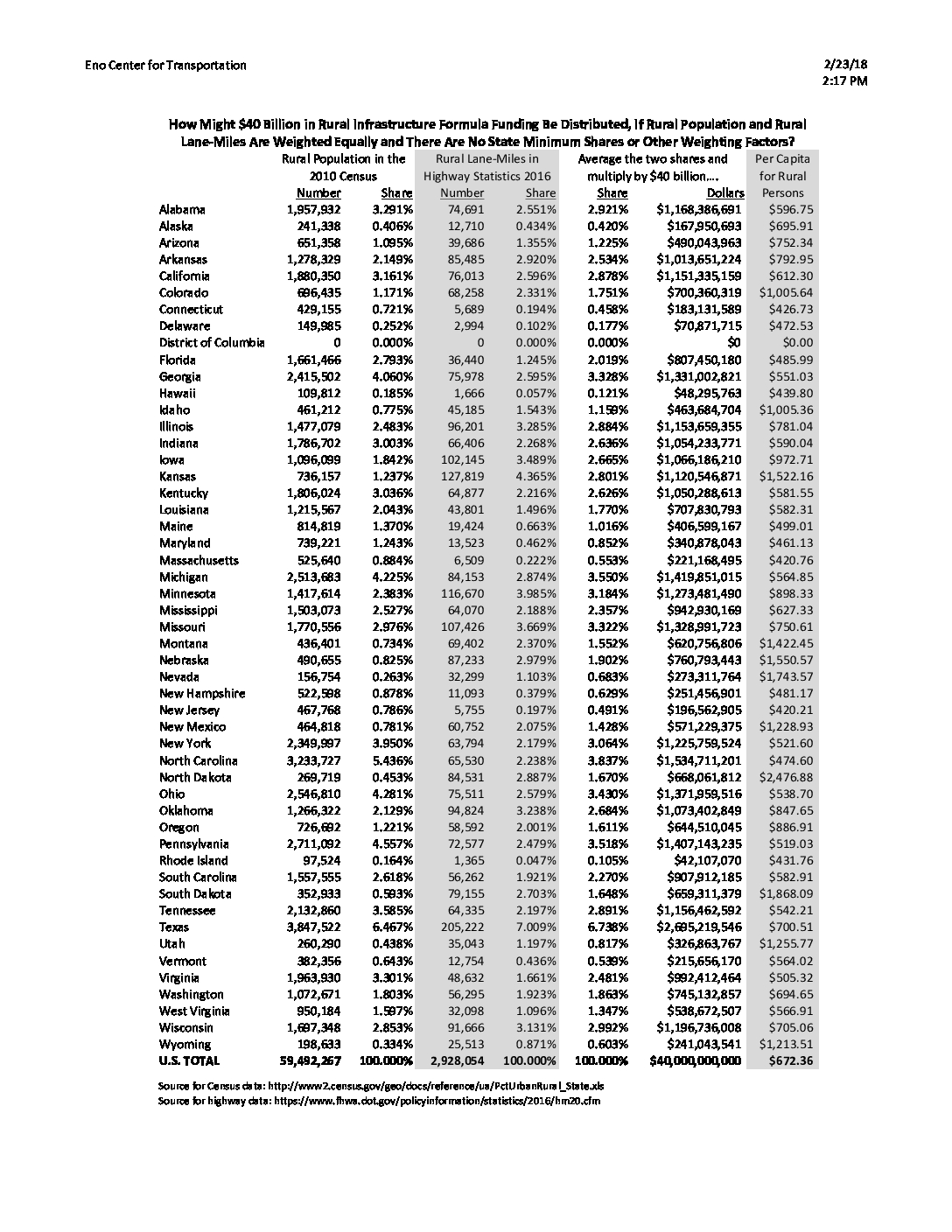
This is a table dated February 23, 2018 hypothesizing how the Trump Administration’s proposed $40 billion in rural infrastructure formula funding would be distributed to states if the two formula factors proposed by the Administration…
This is House Document 95-284, President Carter’s message to Congress of January 26, 1978 transmitting his proposed highway and mass transit reauthorization bill.
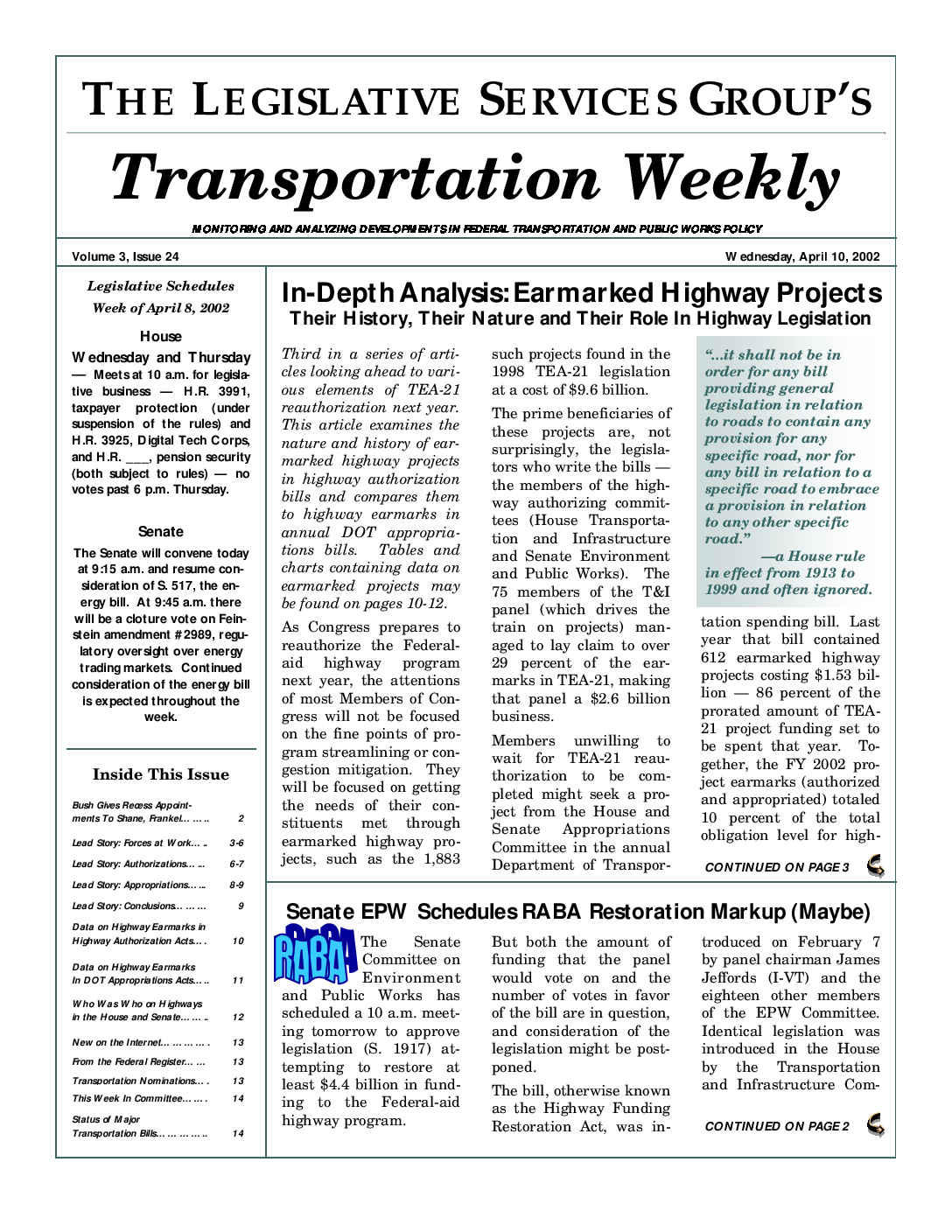
This is a copy of the April 10, 2002 issue of Transportation Weekly that contained a history of federally earmarked highway projects.
This is a copy of the January 17, 2006 issue of Transportation Weekly that contained a complete attribution of the $6.9 billion in “above the line” earmarks of highway projects in the 2005 SAFETEA-LU law.

One-page table showing apportionments of highway contract authority to states for fiscal year 2018 under the FAST Act. Numbers are taken from FHWA Notice 4510.816 but the NHPP total has also been reduced slightly for…
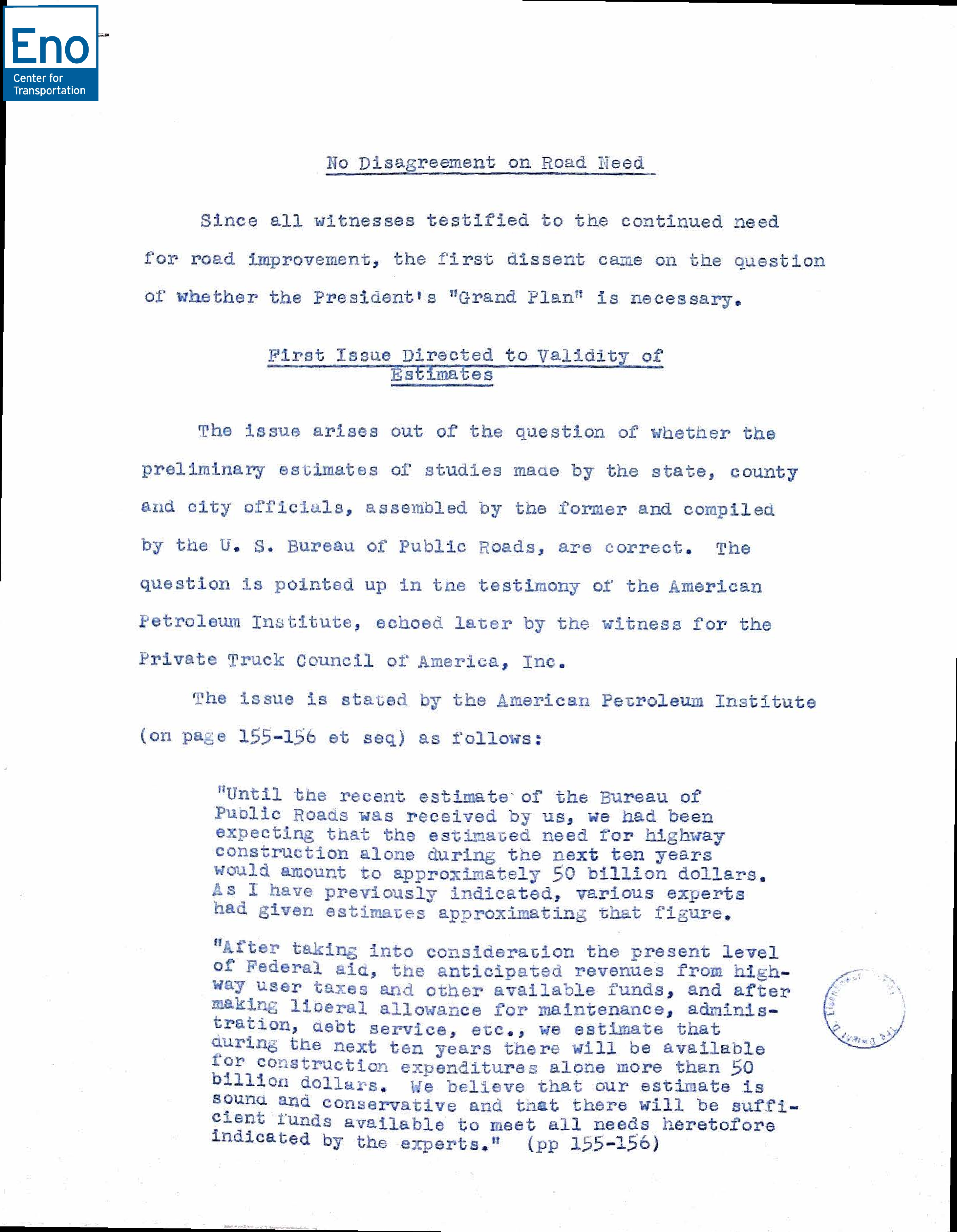
This is a 16-page confidential summary of the October 1954 hearings of the President’s Advisory Committee on a National Highway System (the “Clay Committee”) prepared by the committee’s staff director, Frank Turner.
This is a PDF of the stenographer’s transcript of the hearings held on October 7 and 8, 1954, by the President’s Advisory Committee on a National Highway Program. (The panel was often referred to as…
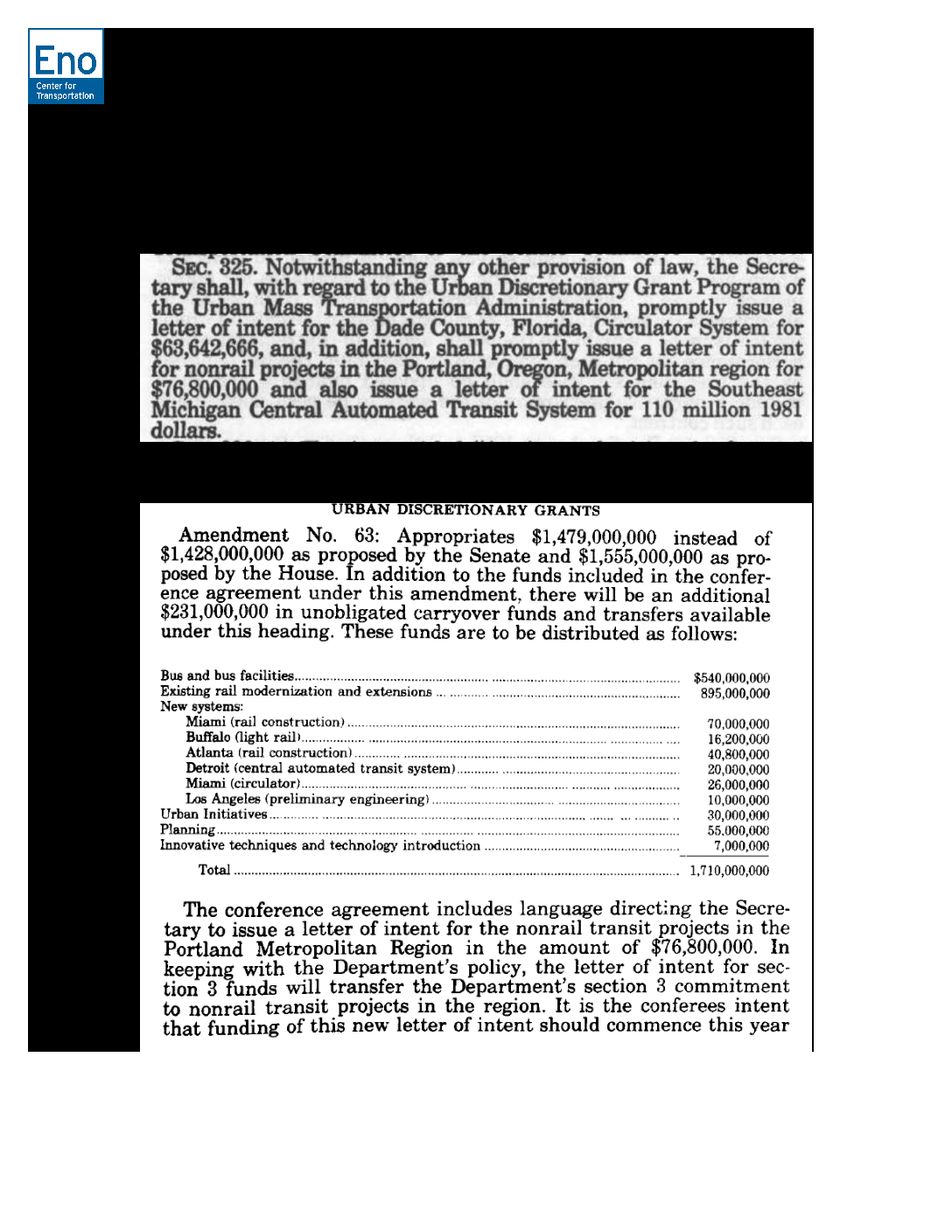
This is a 19-page PDF file showing every Congressional earmark of a mass transit “new start” project in an appropriations bill or conference report prior to the enactment of the 1991 ISTEA surface transportation authorization…
Communities constantly evolve and change in response to social, political, economic, technological and environmental forces. Effectively planning for this kind of change in transportation requires the cultivation of a participatory and informed decision-making process that…