Getting Around California’s Property Tax Restrictions to Fund Transit
San Francisco voters need to spend much more time preparing for Election Day than I do. When I go to the polls on November 3, I’ll be voting for candidates in 8 different races. San Francisco’s ballots include 30 candidate races and 25 ballot measures. These measures include proposals to create a city-owned bank, increase funding for housing, and allow cars in Sunset Dunes Park during weekdays.
Two transit measures are on the ballot. In a recent ETW article, Sohail Husain wrote about Proposition RTM (Regional Transit Measure), a proposed five-county sales tax to support Muni, BART, Caltrain, AC Transit, and other Bay Area transit services. This measure would raise the sales tax by one percentage point in San Francisco and half a percentage point in the other counties.
The second measure, Proposition H, asks San Francisco voters: “Shall the City fund Muni service through a new annual parcel tax on real estate at rates ranging from $129 per parcel up to a maximum of $400,000 per parcel, depending on the type of property and its size and adjusted annually for inflation, for estimated revenue of $177 million a year for 15 years?”
If passed, the measure is expected to generate approximately $177 million annually to help close Muni’s growing budget deficit. Muni operates the city’s bus, light rail, streetcars, and cable car systems.
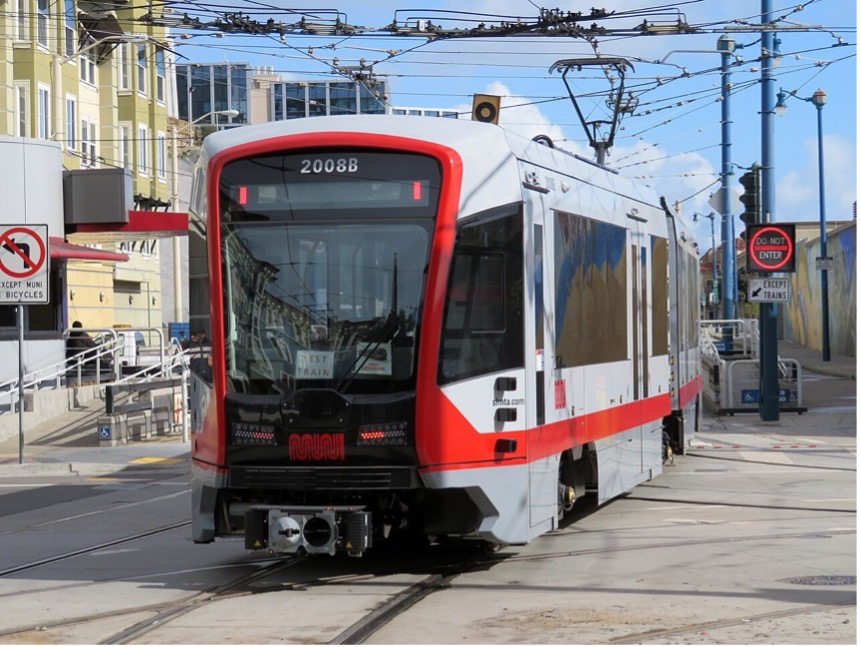
Muni’s light rail. Photo Credit: Pi.1415926535 per Wikimedia.
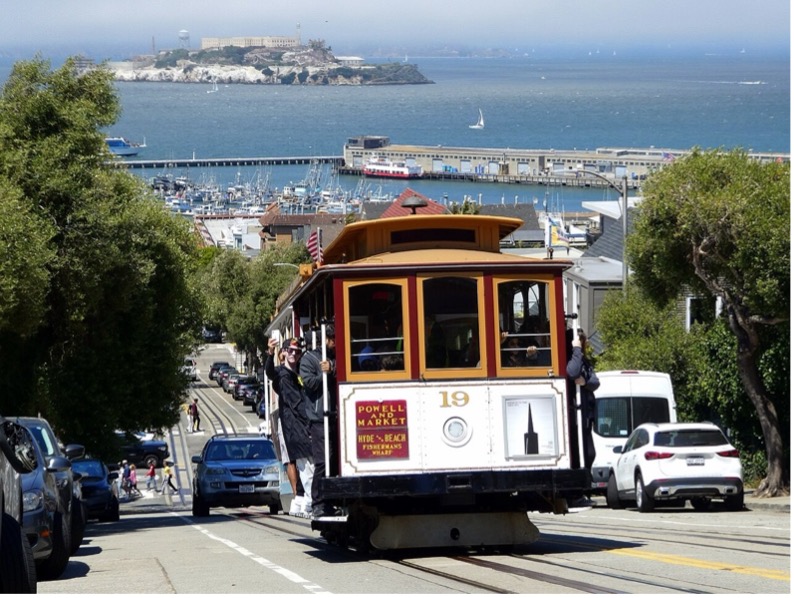
Muni’s Cable Car. Photo Credit Pi.1415926535 per Wikimedia.
A parcel tax not a property tax
Proposition H, known as Stronger Muni for All, would establish the annual parcel tax beginning in July 2027. Unlike a property tax which is typically based on assessed value, the levy would depend primarily on property type and building size.
California’s Proposition 13, approved by voters nearly 50 years ago, limits property tax rates and restricts annual increases. Proposition H, a voter-approved parcel tax, gets around that restriction. It is a separate levy that does not depend directly on a property’s assessed value.
If Proposition H passes, owners of single-family homes up to 3,000 square feet would pay $129 annually with higher charges for larger homes. Certain senior homeowners would qualify for exemptions, and rates would be adjusted for inflation. Depending upon building and lot size, multifamily property owners would pay between $249 and $50,000 while owners of commercial properties would pay between $799 and $400,000.
Muni’s financial woes
The San Francisco Municipal Transportation Agency (SFMTA) is responsible for the management of all ground transportation in the city, including Muni as well as bicycling, paratransit, parking, traffic, walking, and taxis.
The agency has been facing financial challenges for years. Before the pandemic, competition from Uber and Lyft put pressure on the agency’s transit and parking revenues. Ridership still has not recovered from its pre-pandemic levels. In its 2018-2019 fiscal year, SFMTA collected $197 million in fares. Its most recent budget estimates that transit revenue will only be $135 million. At the same time, its expenses have increased from $1.2 billion to $1.6 billion.
The agency is now facing the largest financial crisis in its history., Despite instituting a hiring freeze, consolidating functions, and reducing management — the SFMTA is facing an annual budget shortfall of $350 million starting in July 2027. Its most recent budget included a $200 million loan from the State of California.
Without additional funding, the agency warns that it would have to cut service. These cuts would include eliminating some routes and doubling wait times on many others.
Proposition H complements the regional ballot measure
The other transit ballot measure, Proposition RTM, would raise the sales tax by one percentage point in San Francisco and half a percentage point in Alameda, Contra Costa, San Mateo, and Santa Clara counties. The proposed 14-year regional tax is projected to generate approximately $980 million annually for transit across the five counties.
SFMTA’s financial plan assumes that Muni would receive approximately $155 million annually from Proposition RTM. That would cover only about half of its projected operating deficit. Proposition H would provide a separate revenue stream to address much of the remainder.
The two measures are independent: voters could approve both, either one, or neither.
Supporters of Proposition H
Supporters of Proposition H say the dedicated revenue would help preserve essential transit service for workers, students, seniors, people with disabilities, and households without cars. They argue that reliable Muni service supports access to jobs and businesses, limits traffic, and contributes to the city’s economic recovery.
Proposition H has attracted support from elected officials, business leaders, and labor organizations. The Chamber of Commerce urges voters to support the measure because “public transit is a critical driver of the San Francisco economy, helping workers, residents, and businesses stay connected.” Likewise, the San Francisco Labor Council, a coalition of more than 150 unions, endorsed the measure.
San Francisco’s mayor, Daniel Lurie, said: “If this does not pass, we could see wait times double … We could see a cut to service by up to 30%. We will see more traffic and gridlock on our streets, which will stunt our economic recovery.”
According to analysis conducted by the San Francisco controller, the potential service cuts would be far worse for the local economy than the impacts of the parcel tax. The controller’s office estimates that service cuts would lead to an 18 percent decrease in transit trips, a 1.4 percent increase in vehicle miles traveled, and a significant increase in trip delays. The report explained that “San Francisco’s extremely high labor productivity is partly a function of the number of people who can access jobs here. When slower commuting reduces that number, overall productivity is affected.”
Opponents of Proposition H
Opponents of Proposition H are not nearly as organized or vocal.
The president of a local merchants association, Ed Siu, questioned the measure’s benefits and argued that it would hurt small businesses already reeling from higher costs of labor, insurance, rents, taxes, and fees. He said, “We understand that Muni is essential to San Francisco. Our seniors, workers, students, residents, visitors, customers, and businesses all depend on a reliable public transportation system. But supporting Muni does not mean giving San Francisco Municipal Transportation Agency another 15 years of taxpayer money without first demanding accountability, transparency, and better management.”
KQED, the PBS affiliate, summarized the opposition’s arguments: “Proposition H writes a blank check to the city’s Municipal Transportation Agency but does not require the SFMTA to cut costs, hit efficiency targets or act on recommendations from a mandated efficiency review. The tax is unfair because it is based on square footage, not property value, and owners of rent-controlled units can pass 50% of the tax on to their tenants. Nobody wants service cuts, but this tax is not the only option.”
Other ETW articles about transit agencies facing a fiscal cliff
Transportation at the Ballot Box 2026 Highlight: Connect Bay Area Transit (September 2026)
Mass Transit Agency Fiscal Woes: Nine Tables and Charts (May 2026)
Halloween Rescue: Illinois Pulls Chicago Transit Agencies Off the Fiscal Cliff (October 2025)
Public Transit Systems on the Edge of a Cliff Amid Funding Shortfalls (September 2025)
Drama in Chicago and Philadelphia: The Transit Fiscal Cliff Has Arrived (June 2025)
Are Transportation Agencies Taking on Too Much Debt? (February 2024)
WMATA Releases Its “Fiscal Cliff” Doomsday Budget (December 2023)
Webinar: Climbing Down From The Fiscal Cliff: Lessons From Transit Advocates (November 2023)
Chicago: Tackling the Fiscal Cliff and Addressing Governance Issues (October 2023)
WMATA Reveals Plans for Fiscal Cliff Doomsday Budget One Year from Now (June 2023)
New NYC Transit Forecast Previews “Fiscal Cliff” Issues (December 2022)
Looking to the Horizon: How Agencies are Anticipating the Mass Transit Fiscal Cliff (November 2022)
The Mass Transit Fiscal Cliff: Estimating the Size and Scope of the Problem (September 2022)