DOT, LoC Commemorate 70th Anniversary of Interstate Highway System
At a June 29 event at the Library of Congress, the Department of Transportation commemorated the 70th anniversary of the signing of the law financing the construction of the Interstate Highway System. At the event (which can be viewed here, along with a lot of shots of the back of my head), Deputy Secretary of Transportation Steven Bradbury, Federal Highway Administrator Sean McMaster, the chairman and ranking minority member of the House Transportation and Infrastructure Committee, and several state DOT representatives paid homage to the Interstate bill and its legacy.
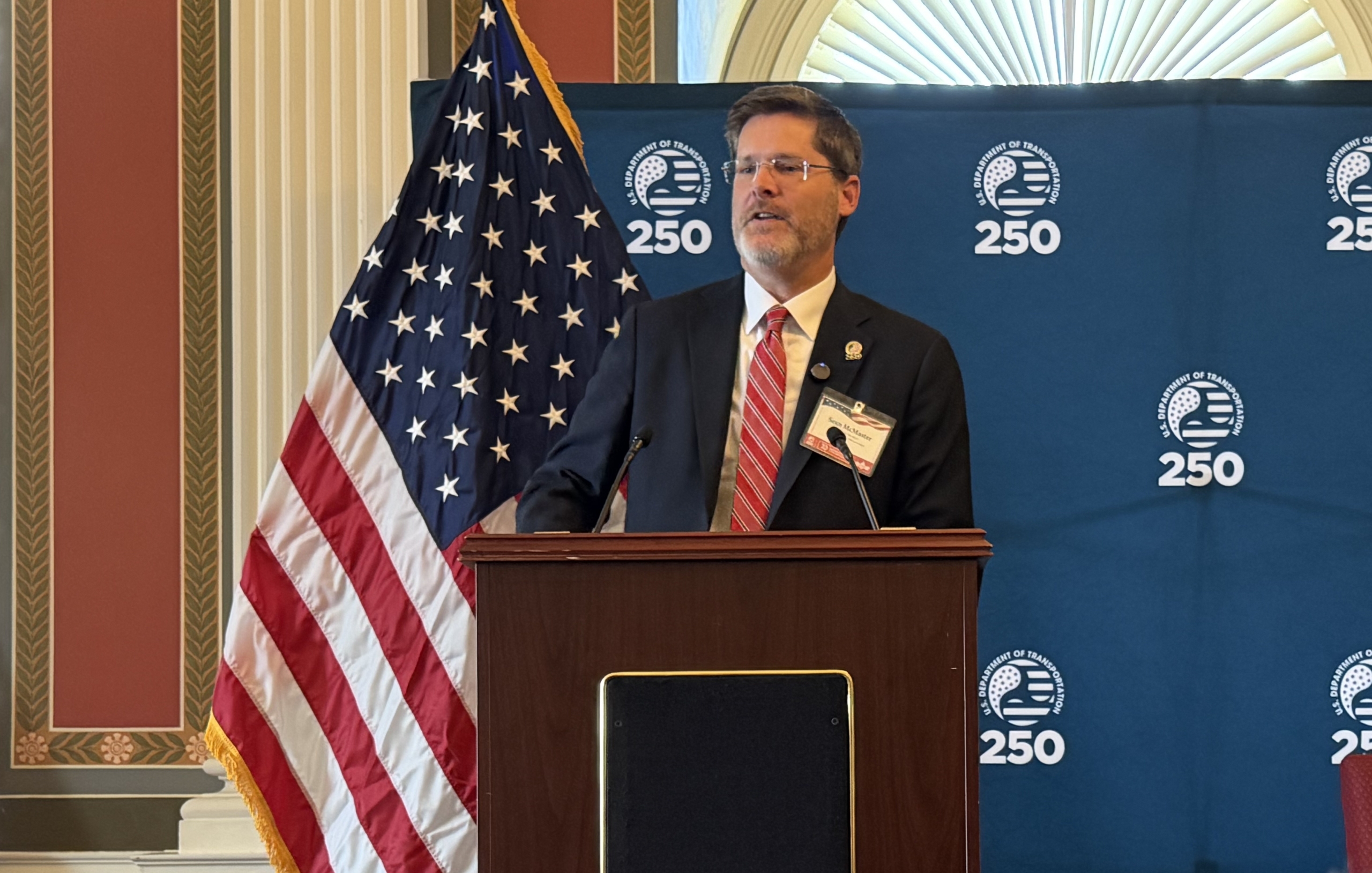
FHWA Administrator Sean McMaster.
(This was much more celebration than accompanied the actual event 70 years prior. President Eisenhower had been taken by ambulance to Walter Reed Hospital on June 8 for emergency intestinal surgery and remained in the hospital until checking out on June 30. Therefore there was no bill signing ceremony on the 29th, and no photo exists of Eisenhower signing the bill. (FHWA historian Richard Weingroff sets the scene.))
The event was nonpartisan, which not to say non-ideological. McMaster and others mentioned that in 1956, there were 64 million privately owned motor vehicles in the US (0.38 vehicles per capita), and today there are 293 million (0.85 vehicles per capita), and presented that as an unalloyed good thing, with which their predecessor Ray “lookit, get people out of their cars” LaHood would disagree.
But McMaster spoke of additional opportunities for economic growth, Bradbury put the event in context of the Semiquincentennial and the Constitution, and Representatives Graves and Larsen suggested that a fitting tribute to these anniversaries would be for Congress to pass their surface transportation reauthorization bill. (Larsen added that funding the Oregon-Washington Interstate bridge replacement would be nice as well.)
In terms of substance, DOT only had three things to offer:
- The promise of an upcoming “Reimagining America’s Interstates” Request for Information to be published in the Federal Register, which will seek “public input to better understand how the system is currently functioning, where to construct new interstate facilities, what major upgrades are needed for existing routes, and how the system can better meet the needs of the 21st-century traveling public. The RFI features 21 targeted questions addressing critical emerging issues, including freight growth and the integration of new technologies.” However, as of today’s Register, the RFI had not yet been published. And it is uncertain if a public RFI will give any better consensus than the massive Future Interstate Study that Congress commissioned in 2015 and which the Transportation Research Board released in 2019 and has since been largely ignored.
- New temporary signage commemorating the 70th anniversary of the Interstate and the 250th anniversary of the Republic. In a memo to states, FHWA says “In support of the observance and commemoration of Freedom 250, the Federal Highway Administration (FHW A) is granting 1) an alternative use of the right-of-way (ROW) approval, and 2) a short-term fair market value (FMV) exception, for the temporary use of areas in highway ROW to install signs and flags providing key information and notice to the traveling public regarding the ‘Freedom 250’ celebration. This extraordinary and infrequent occasion of national significance warrants these exceptions, which are time-limited and do not establish a replicable precedent.” Since the signage comes from the Freedom 250 organization, the signs do say “Delivered by President Donald J. Trump and Secretary Sean P. Duffy” at the bottom. And, if you read the fine print in the style guide, “The ‘Delivered By’ language and the Freedom 250 mark must remain unchanged and in place and may not be removed, altered, obscured, repositioned, or otherwise modified in any manner.” The fine print also says that the signs have to be removed by December 31, 2027.
- There was cake, and it was good cake, and the cake also included the signage.
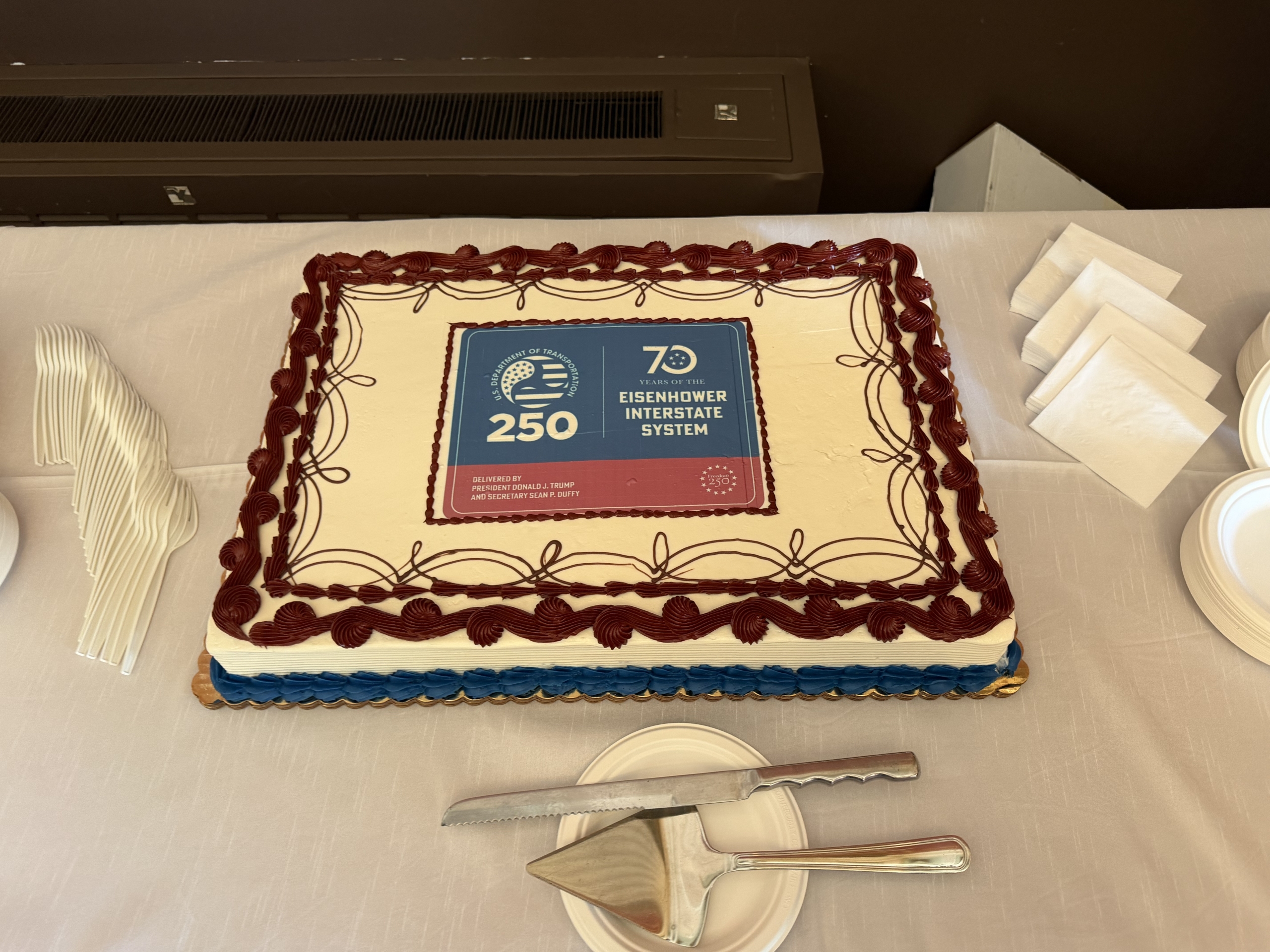
There was cake.
The Library did not only play host, it also provided access to some interesting artifacts from its own collections. Including:
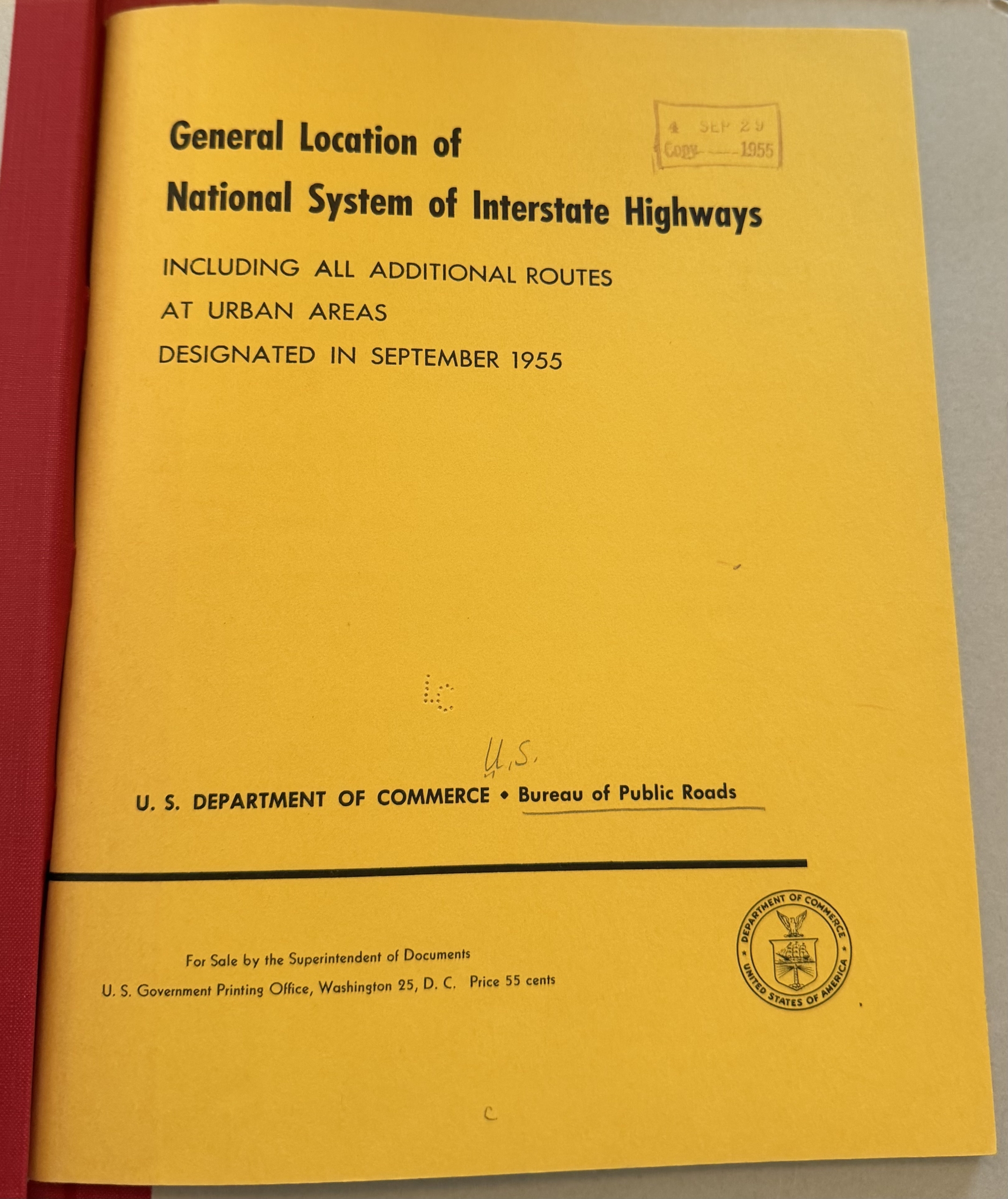
A hard-to-find original hard copy of the 1955 “Yellow Book” of planned urban Interstate locations and yes, it was indeed yellow.
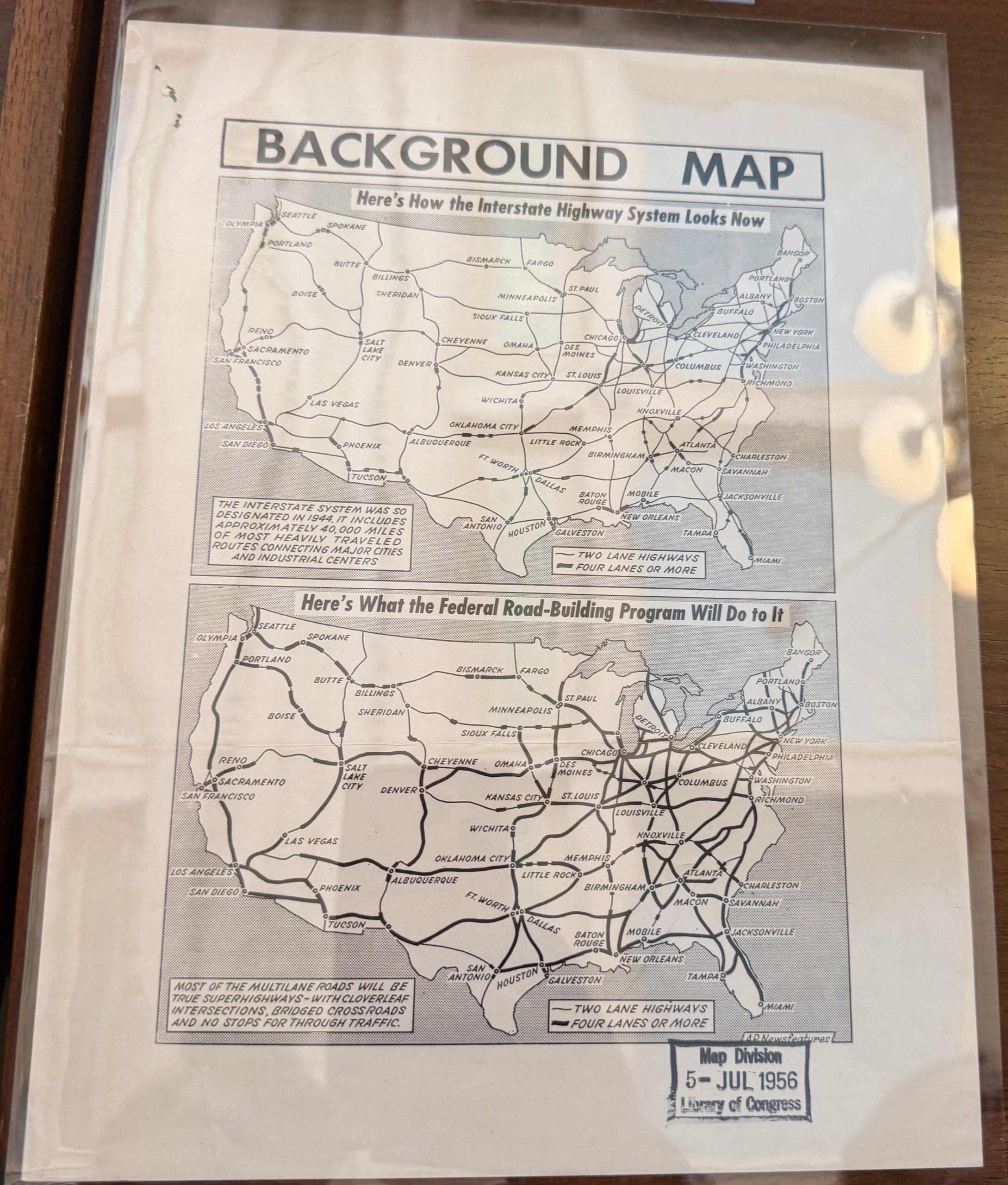
And there was an interesting map from one of the newspaper syndicates at the time of the bill signing showing improved lane-miles, not just lanes.