
Republicans Favored for Senate, House Control Is a Toss-Up
Next Tuesday is Election Day. In addition to what is by all measures a very close Presidential contest, control of both chambers of Congress could conceivably switch hands in the next Congress.
Senate
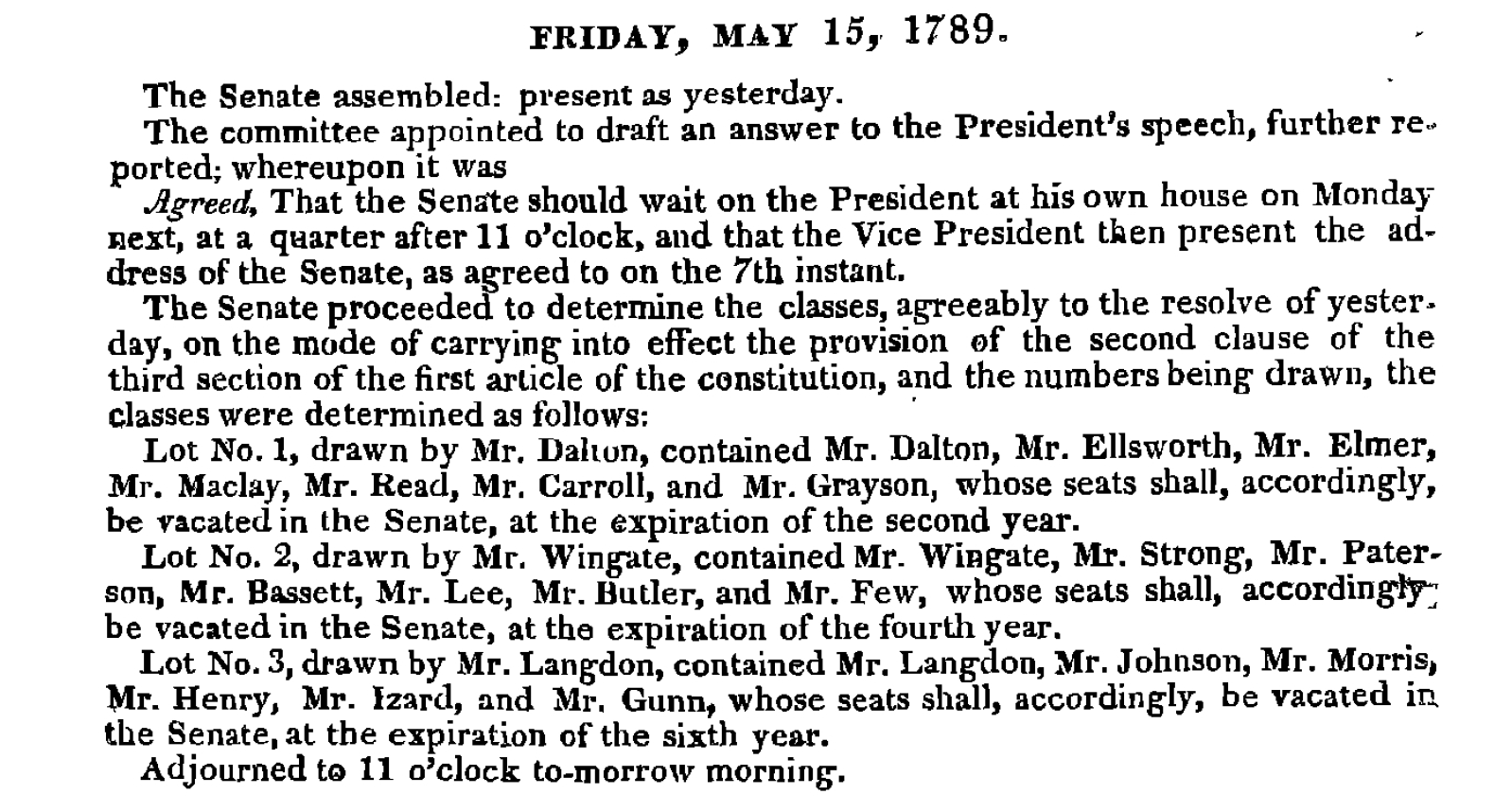
The Democrats have a problem of sheer bad luck that dates back to May 1789, when three Senators drew lots to determine which Senate seats would face re-election in 1790, 1792, and 1794. Blame Sen. Tristan Dalton of Massachusetts, who on May 15 drew the ticket that committed his seat, and the rest of one-third of the Senate, to come up for re-election in 1790 and every six years thereafter, up to 2024.
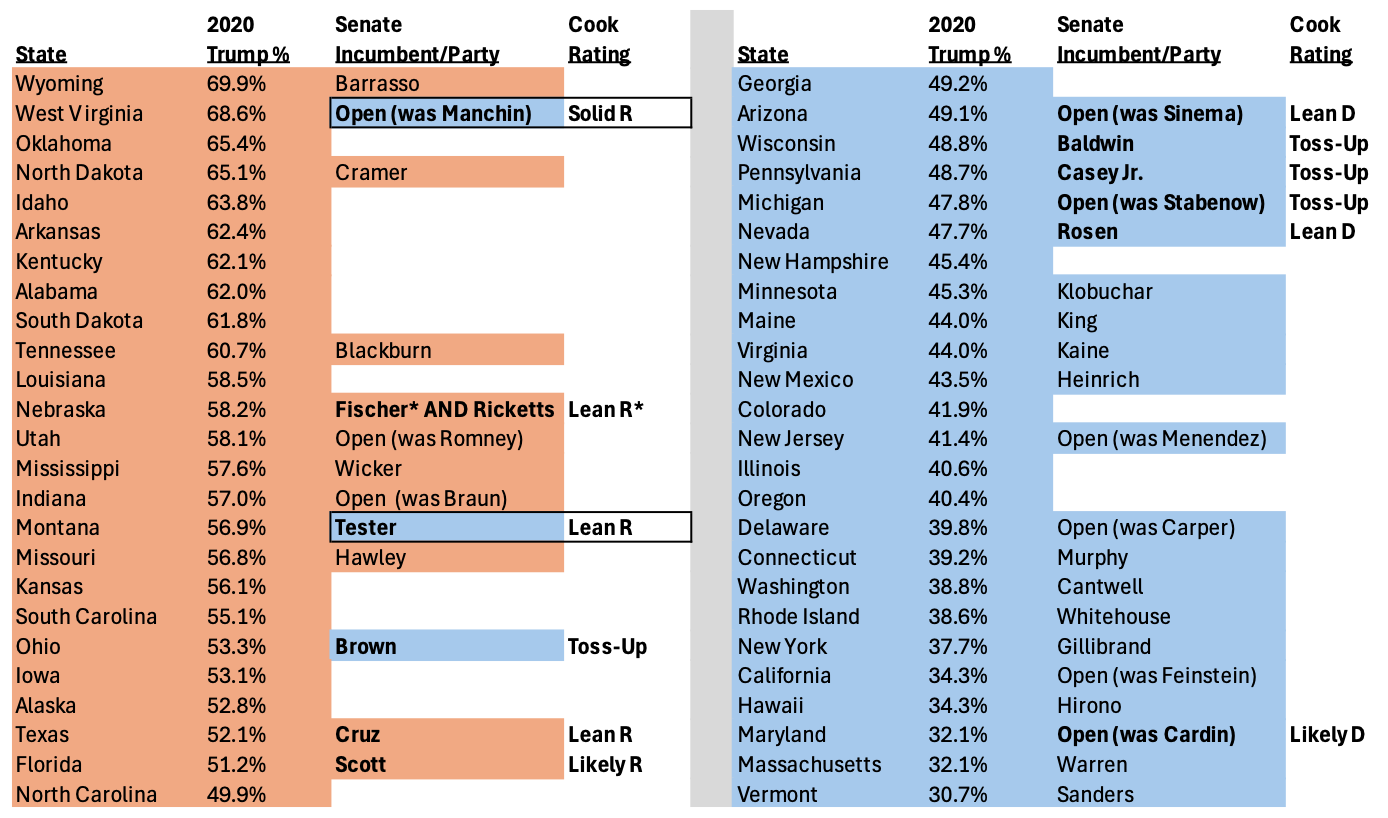
That drawing, and the subsequent drawings held when each new state joined the Union, means that Democrats are defending 23 seats this year while Republicans are only defending 11 (which includes a special election in Nebraska – they really only have ten seats in this class).
As part of that bad luck, three of the Democratic-held seats are in states where Trump won handily in 2020 and is looking to do better this year. Of those three, everyone admits that West Virginia (where Joe Manchin is retiring) is gone, and a lot of people are acting like Montana (Jon Tester, fighting uphill in a state that went 57% Trump in 2020) is done for as well. And Sherrod Brown reportedly told donors that he needs to run 8.5 points ahead of Vice President Harris in Ohio in order to be re-elected, but Trump got 53 percent in the Buckeye State last time and is polling in that ballpark this time.
That means that the GOP, currently holding 49 Senate seats, starts out as the favorite to take control of the Senate next year, with a very slim majority. However, there are five Democratic-held seats in states where Trump got 48 to 49 percent of the vote four years ago (Arizona, Wisconsin, Pennsylvania, Michigan, Nevada), all of which are rated either Toss-Up or Lean Democratic by the Cook Report. These are somewhat offset by the Texas and Florida seats, where Trump got 52 and 51 percent in 2020, respectively, which are held by Republicans.
A strong headwind from the Presidential race could drag most or all of those seven seats one way or the other. Bottom line: Republicans look to hold between 50 and 54 Senate seats in the next Congress, depending on how well the top of the ticket performs.
House
Almost two years ago, when it became clear in the aftermath of the 2022 elections that the GOP would seize control of the House of Representatives with a razor-thin majority of 222 to 212, it was obvious that they would have a hard time governing. (In the previous Congress, Democrats had held an identically small majority, but (a) Democrats under Speaker Pelosi were a much more disciplined caucus than Republicans under wither Speaker McCarthy or Speaker Johnson, and (b) COVID had already given Democrats an excuse to institute proxy voting on the House floor for the first time, which made managing a razor-thin majority much, much easier. The GOP got rid of proxy voting when they took back control in January 2023.)
But of the 435 House seats, only about ten percent could realistically change hands. The Cook Political Report said today that if you give every seat that they rate as “Safe,” “Likely” or “Lean” towards a party to that party, and divide their 22 “Toss-Up” races 50-50, you wind up with a majority of 219 Republicans, 216 Democrats. Which would make the next two years even more miserable for House members than the last two years, no matter who controls the White House or the Senate.
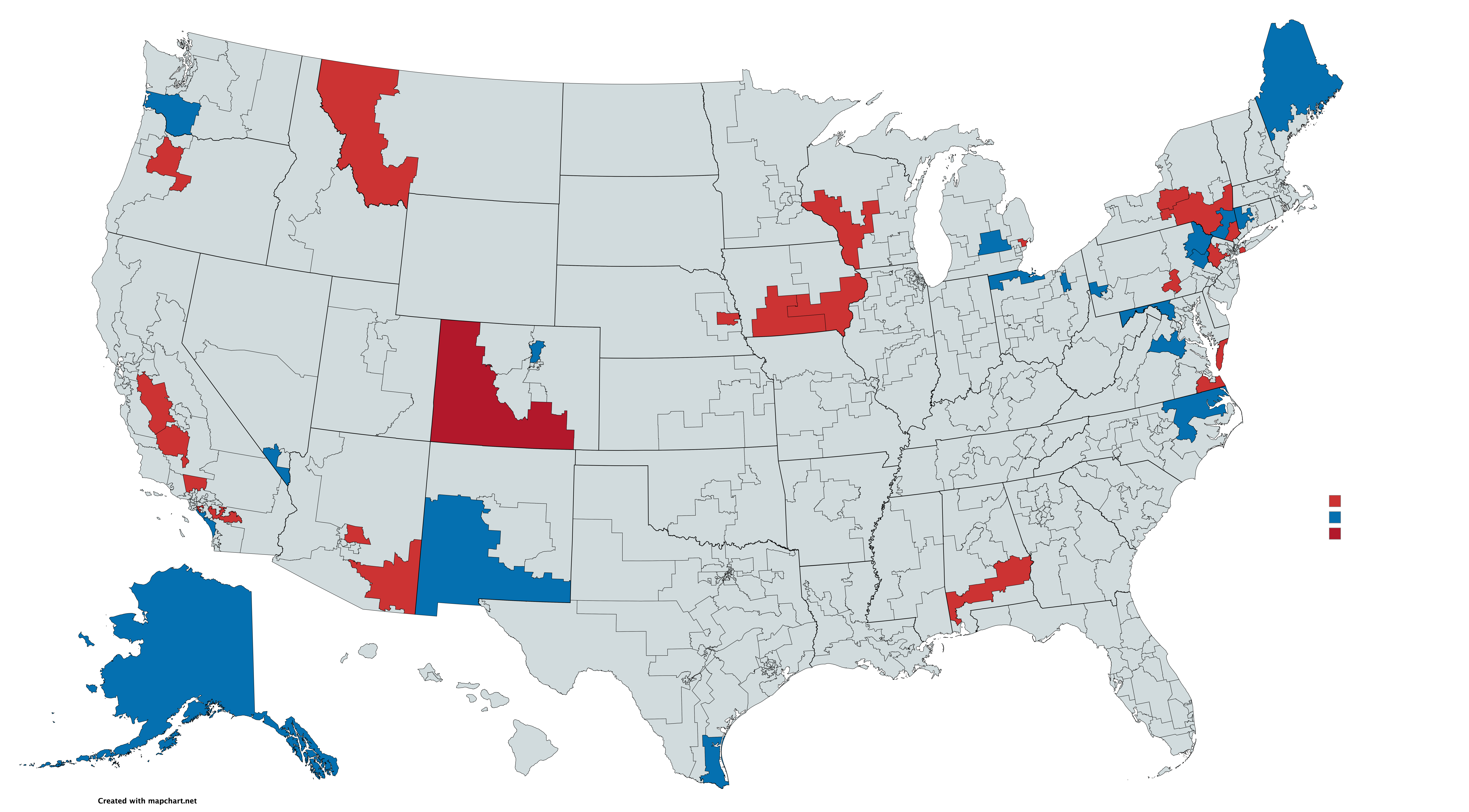
The 43 seats listed by the Cook Political Report as either likely to change hands, or as “Lean D/R” or “Toss-Up” are below. At best, Republicans think they might be able to increase their margin by five or so seats, but if the national trend goes a couple of points better for Vice President Harris than currently anticipated, Democrats could wind up controlling the House once more with a margin similar in size to the one they had in the last Congress (Or more narrow than that.)
Because 11 of the at-play seats are on the West Coast, where there is so much vote-by-mail that it can take over a week to call close House elections, we may not know who will control the House until days after Election Day.
11 of the at-play seats are legislators on the House Transportation and Infrastructure Committee, most notably Scott Perry (R-PA), who is fifth in seniority on the GOP side and who is usually offers a very large number of very conservative amendments at committee markups. Other T&I members on the endangered list are Lori Chavez-DeRemer (R-OR), Tom Kean Jr. (R-NJ), Anthony D’Esposito (R-NY), Derrick Van Orden (R-WI), Brandon Williams (R-NY), Marc Molinaro (R-NY), and John Duarte (R-CA), along with Pat Ryan (D-NY), Mary Peltola (D-AK), and Chris Deluzio (D-PA) on the Democratic side.
And three of the at-play seats belong to members of the Transportation-HUD Appropriations Subcommittee: Juan Ciscomani (R-AZ), David Valadao (R-CA), and Ryan Zinke (R-MT).
Competitive House seats, 2024:
AL-02 OPEN (R)
AK-AL Peltola (D)
AZ-01 Schweikert (R)
AZ-06 Ciscomani (R)
CA-13 Duarte (R)
CA-22 Valadao (R)
CA-27 Garcia (R)
CA-41 Calvert (R)
CA-45 Steel (R)
CA-47 OPEN (D)
CA-49 Levin (D)
CO-03 OPEN (R)
CO-08 Caraveo (D)
CT-05 Hayes (D)
IA-01 Miller-Meeks (R)
IA-03 Nunn (R)
ME-02 Golden (D)
MD-06 OPEN (D)
MI-07 OPEN (D)
MI-10 James (R)
MT-01 Zinke (R)
NE-02 Bacon (R)
NV-03 Lee (D)
NJ-07 Kean (R)
NM-02 Vasquez (D)
NY-04 D’Esposito (R)
NY-17 Lawler (R)
NY-18 Ryan (D)
NY-19 Molinaro (R)
NY-22 Williams (R)
NC-01 Davis (D)
OH-09 Kaptur (D)
OH-13 Sykes (D)
OR-05 Chavez-DeRemer (R)
PA-07 Wild (D)
PA-08 Cartwright (D)
PA-10 Perry (R)
PA-17 Deluzio (D)
TX-34 Gonzalez (D)
VA-02 Kiggans (R)
VA-07 OPEN (D)
WA-03 Perez (D)
WI-03 Van Orden (R)